
Introduction
Water conservation and efficient landscape management are becoming increasingly important for homeowners, landscape professionals, and property developers. residential irrigation design software helps users plan watering systems, calculate water requirements, organize sprinkler layouts, and improve the distribution of water across residential properties. In 2026, digital planning tools are attracting attention because they can support accurate designs, reduce avoidable water waste, and simplify irrigation projects.
The Growing Importance of Irrigation Planning
Residential landscapes include lawns, flower beds, shrubs, vegetable gardens, and trees, each with different watering requirements. A poorly planned irrigation system may deliver excessive water to some areas while leaving others inadequately supplied.
Digital design tools can help address these challenges by organizing property dimensions, mapping planting areas, and identifying suitable irrigation zones. Designers can also consider soil conditions, slope, water pressure, and available flow when preparing a layout.
From a statistical perspective, useful measurements include estimated water demand, irrigation coverage, system capacity, and projected operating time. These indicators help users evaluate whether a proposed design meets the property’s requirements.
Five Important Statistics for Residential Irrigation
Several measurable factors can improve irrigation planning and performance.
Water consumption: Recording water use before and after system improvements helps determine whether a design delivers measurable savings.
Coverage efficiency: Measuring how evenly water reaches the intended landscape areas can reveal dry spots, overspray, and unnecessary runoff.
System pressure: Comparing available pressure with equipment requirements helps identify potential performance problems before installation.
Irrigation scheduling: Tracking watering duration and frequency helps align irrigation with plant requirements and seasonal conditions.
Maintenance frequency: Recording leaks, blocked emitters, and sprinkler adjustments provides insight into long-term system reliability.
Actual results vary according to climate, soil composition, plant selection, rainfall, equipment condition, and user behavior. Reliable reporting should therefore distinguish measured results from estimates.
How Design Software Supports Better Decisions
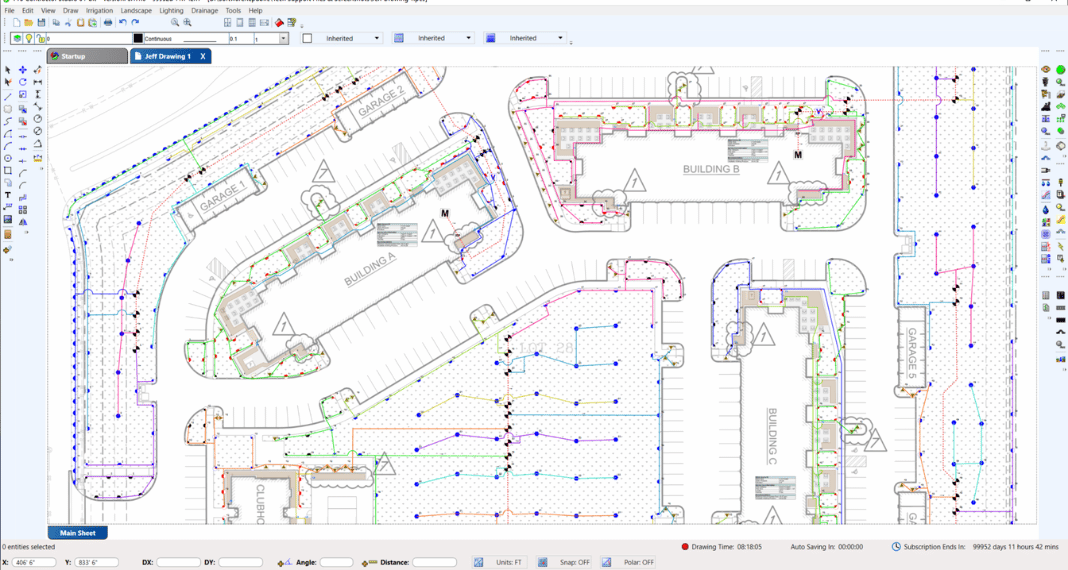
Digital irrigation planning can improve accuracy by allowing users to create scaled property layouts and divide landscapes into manageable watering zones. These zones can group plants with similar water requirements, helping prevent incompatible watering schedules.
Some planning workflows also support sprinkler placement, pipe routing, flow calculations, and irrigation schedules. When accurate site measurements and equipment specifications are available, these features can help identify design conflicts before installation begins.
Another benefit is documentation. A digital plan can provide a reference for installers and homeowners, making future repairs, modifications, and seasonal adjustments easier to manage.
Smart Technology and Water Conservation
Weather information, soil moisture sensors, and automatic controllers can further improve irrigation management when integrated into an appropriate system. Rainfall adjustments may prevent unnecessary watering, while moisture-based controls can help match irrigation to actual soil conditions.
However, technology alone does not guarantee water savings. Correct installation, suitable scheduling, regular maintenance, and compliance with local watering restrictions remain essential.
Measuring Return on Investment
Homeowners can evaluate an irrigation project by comparing installation expenses, ongoing maintenance costs, and water bills over time. A useful assessment should consider the initial investment, equipment lifespan, repair requirements, and changes in water consumption.
For example, comparing monthly water usage across similar seasonal periods can help account for differences in weather and landscape demand. Keeping records creates a stronger basis for deciding whether design improvements are financially worthwhile.
Conclusion
Residential irrigation design is increasingly focused on precision, efficient resource use, and long-term landscape performance. Digital planning tools can help organize layouts, calculate system requirements, and identify opportunities to improve watering practices. By tracking water consumption, coverage, pressure, scheduling, and maintenance, homeowners and professionals can make better-informed decisions. Accurate measurements and regular system reviews remain essential for creating reliable irrigation systems and supporting responsible water management throughout 2026.
